Luxury Yurts: The 2025 Guide to High-End Glamping Stays
Discover how luxury yurts are reshaping the glamping industry with lower build costs, premium guest experiences, and a projected market growth of 9.5% CAGR through 2033. This guide for site owners and travelers explores the business case, design essentials, and booking trends behind the fastest-growing segment of outdoor hospitality.
Table of Contents
- What Makes a Yurt Luxury
- The Business Case for Luxury Yurts
- Design and Amenities Guests Expect
- Marketing and Booking Trends
- Frequently Asked Questions
- Comparison: Luxury Yurt vs. Traditional Cabin
- Practical Tips for Operators
- Final Thoughts on Luxury Yurts
- Useful Resources
Article Snapshot: Luxury yurts are high-end, tent-like structures that combine the romance of outdoor living with hotel-grade amenities. They cost 30–40% less to build than traditional hotels, command premium nightly rates, and are projected to drive a $7.9 billion glamping market by 2033. This article covers the business model, design standards, and booking strategies for operators and investors.
Market Snapshot: Luxury Yurts
- The global glamping market, including luxury yurts, was valued at $3.8 billion in 2025 (Grand View Research, 2025)[1].
- It is projected to grow from $4.2 billion in 2026 to $7.9 billion by 2033 at a CAGR of 9.5% (Grand View Research, 2026)[1].
- Direct bookings accounted for 54.7% of global glamping revenue in 2025 (Grand View Research, 2025)[1].
Luxury yurts have emerged as a defining force in the glamping revolution, offering travelers an immersive outdoor experience without sacrificing comfort. For property owners and hospitality investors, these structures present a compelling opportunity: lower upfront costs, high perceived value, and strong year-round booking potential. This article examines what defines a luxury yurt, why the business model works, what amenities guests expect, and how operators can capture a growing market.
What Makes a Yurt Luxury
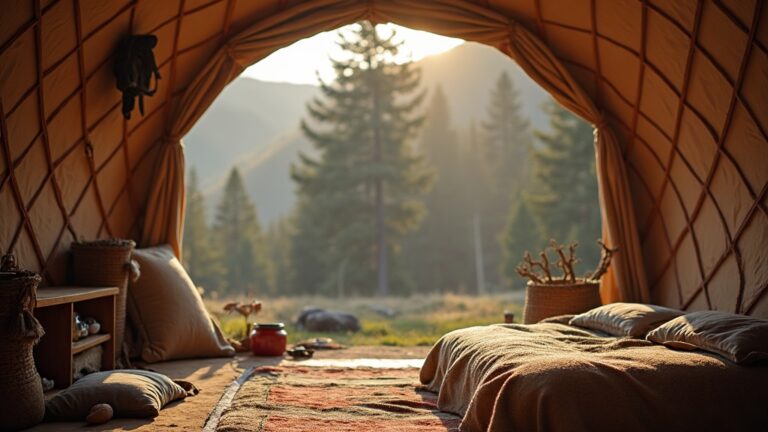
A luxury yurt is fundamentally different from a standard camping tent or a basic yurt. The term refers to a permanent or semi-permanent circular structure – traditionally inspired by Central Asian nomads – that has been upgraded with high-end finishes, insulation, and full-service amenities. Unlike a canvas tent, a luxury yurt typically features a solid wood frame, a durable fabric or synthetic shell, and a raised platform floor. Inside, guests find real furniture, climate control, en-suite bathrooms, and often a kitchenette. David Dwyer, Founder of Trend Tents, explains: “Innovative glamping lodging like luxury yurts can be built for 30–40% less than traditional hotels while still commanding premium nightly rates because guests value the experience more than the square footage.”[2] This combination of lower build cost and higher revenue potential is the core of the business case.
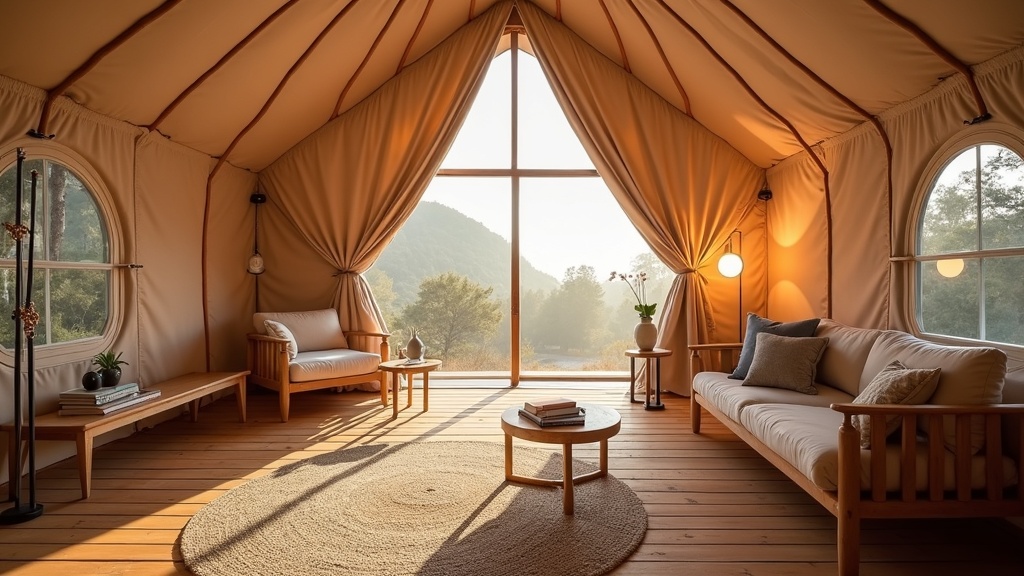
The aesthetic of a luxury yurt is equally important. Operators often choose interiors that reflect the local landscape – rustic wood and leather in mountain settings, light linens and bamboo in coastal areas. The circular layout encourages social interaction, while large skylights or dome windows bring the outdoors in. For many travelers, the unique geometry and immersive environment are a key part of the appeal. For a deeper look at how to design and market these properties, see the dragonyurts guide on this site.
The Business Case for Luxury Yurts
The financial argument for luxury yurts is straightforward: lower capital expenditure meets higher average daily rates (ADR). According to Sarah Riley, a glamping business consultant and founder of The Glamping Academy, “Luxury yurts are one of the fastest ways for landowners to enter the high-end glamping market because they combine relatively low setup costs with a strong perceived value and year‑round booking potential.”[3] This is supported by data from Grand View Research, which shows the global glamping market – including luxury yurts – was valued at $3.8 billion in 2025 and is projected to reach $7.9 billion by 2033, growing at a compound annual rate of 9.5%[1].
Operators also benefit from the direct booking trend. Grand View Research reports that direct bookings accounted for 54.7% of global glamping revenue in 2025, meaning more than half of guests book luxury yurts directly with operators rather than through third-party platforms[1]. This reduces commission costs and builds a loyal customer base. Furthermore, luxury yurts can be built for 30–40% less than comparable hotel rooms, as noted by Trend Tents[2]. The lower entry barrier makes this an attractive model for first-time hospitality entrepreneurs and established resorts looking to expand. Improved financing access through grants, loans, and investment partnerships was identified as a top need for operators in 2024, according to Glamping Show Americas Magazine[4].
Design and Amenities Guests Expect
Modern guests have clear expectations for a luxury yurt. The era of roughing it is over; travelers now demand hotel-grade comfort in a natural setting. Glamping Show Americas Magazine notes that modern amenities such as luxury bathrooms, Wi‑Fi, heating, and cooling are now standard expectations, driving the design of upscale yurts[4]. A luxury yurt must include a private bathroom with a hot shower, a comfortable king or queen bed, reliable climate control, and enough power outlets for devices. Many operators also add a wood-burning stove or fireplace for ambiance.
Dana Seavy, Owner of Pacific Yurts, observes that “Resort operators tell us that luxury yurts with private bathrooms and high‑end finishes routinely achieve higher occupancy and ADR than standard rooms, particularly in scenic destinations where the structure itself becomes part of the attraction.”[5] The design should also consider sustainability. Marcin Wojcik, CEO of FDomes Glamping, notes that demand is being driven by travelers who want eco‑conscious stays with hotel‑grade amenities, and that operators who invest in design, insulation, and renewable energy systems see the strongest repeat business[6]. This means choosing materials with low environmental impact, installing solar panels, and using composting toilets where possible. For more on selecting the right structure, see the dragonyurts guide 2.
Marketing and Booking Trends
Marketing a luxury yurt requires a strategy that emphasizes experience over square footage. The unique, photogenic nature of yurts makes them highly shareable on social media platforms like Instagram and Pinterest. Kendra Harvey, Executive Director of the Dude Ranchers’ Association, reports that “Our member ranches are seeing luxury yurts book out faster than traditional cabins, especially with younger guests who want an immersive Western experience without sacrificing hotel‑level comfort.”[7] This demographic values authenticity, sustainability, and the ability to disconnect from daily life – while still having Wi‑Fi for essential connectivity.
The direct booking trend is a critical lever for operators. With over half of glamping revenue coming from direct channels, investing in a professional website, a seamless booking engine, and a strong email marketing program is essential. Operators should also consider listing on niche glamping directories and offering packages that include local experiences like guided hikes, farm-to-table dinners, or wellness retreats. The key is to tell a compelling story about the property and its setting. For further reading on the broader market trends, an external resource like the Grand View Research glamping market report provides detailed data and forecasts.
Important Questions About Luxury Yurts
How much does it cost to build a luxury yurt?
The cost varies significantly based on size, materials, and location. A basic shell can start around $15,000 to $30,000, but a fully outfitted luxury yurt with insulation, plumbing, electricity, and high-end finishes typically ranges from $50,000 to $150,000. This is still 30–40% less than building a comparable hotel room, according to industry data. Land preparation, foundation work, and permits are additional costs to factor in.
Can you live in a luxury yurt year-round?
Yes, with proper insulation, a reliable heating source, and climate control, a luxury yurt can be a comfortable year-round residence. Many operators use wood stoves, radiant floor heating, or mini-split heat pumps to maintain a consistent temperature. The key is choosing a yurt designed for four-season use, with a thick insulation layer, a durable outer shell, and proper ventilation to prevent condensation.
What is the average nightly rate for a luxury yurt?
Nightly rates for luxury yurts vary by location, season, and amenities. In popular glamping destinations, rates typically range from $200 to $600 per night. Premium properties with private hot tubs, exceptional views, or all-inclusive packages can command $800 or more. The high perceived value and unique experience allow operators to charge rates comparable to or exceeding those of mid-range hotel rooms.
Are luxury yurts eco-friendly?
Luxury yurts can be highly eco-friendly, depending on the design and materials. Their smaller footprint requires fewer resources to build and heat. Many operators use sustainable materials like FSC-certified wood, install solar panels, and implement water-saving fixtures. The circular design also promotes natural airflow, reducing the need for air conditioning. However, the environmental impact depends on the specific choices made by the operator.
Comparison: Luxury Yurt vs. Traditional Cabin
When deciding between a luxury yurt and a traditional cabin for a glamping operation, several factors come into play. The table below outlines the key differences in cost, construction time, guest experience, and marketability.
| Feature | Luxury Yurt | Traditional Cabin |
|---|---|---|
| Build cost (per unit) | Lower (30–40% less than hotel rooms) | Higher (standard construction costs) |
| Construction time | Weeks to a few months | Months to a year or more |
| Guest experience | Unique, immersive, photogenic | Familiar, comfortable, conventional |
| Marketability | High (social media appeal, novelty) | Moderate (standard lodging) |
| Year-round suitability | Possible with proper insulation and heating | Generally easier to insulate |
Practical Tips for Operators
For anyone considering adding luxury yurts to a property or launching a new glamping business, here are actionable steps. First, start with a solid business plan that includes market research, a budget for land preparation and permits, and a realistic timeline. Second, invest in high-quality insulation and climate control to ensure year-round comfort and positive guest reviews. Third, prioritize a professional website with a direct booking engine to capture the 54.7% of revenue that comes from direct channels. Fourth, create a memorable guest experience by offering local partnerships – such as guided hikes, farm-to-table meals, or spa services – that differentiate the property. Finally, focus on sustainability. Guests increasingly seek eco-conscious stays, so incorporating solar power, water conservation systems, and locally sourced materials can be a strong selling point. Regularly update the property based on guest feedback to maintain high ratings and repeat bookings.
For more about Luxury yurts, see learn more about luxury yurts.
Final Thoughts on Luxury Yurts
Luxury yurts represent a smart investment in the rapidly growing glamping market. Their lower build costs, high guest appeal, and strong direct booking trends make them an attractive option for both new and experienced operators. By focusing on design, amenities, and a memorable experience, you can capture a share of a market projected to reach $7.9 billion by 2033. To learn more about launching your own high-end glamping operation, browse our detailed dragonyurts guide for step-by-step advice.
Useful Resources
- Glamping Market Size, Share & Trends Analysis Report. Grand View Research.
https://www.grandviewresearch.com/industry-analysis/glamping-market - The Glamping Revolution: Luxury Camping & Unique Stays Redefine American Vacations. Trend Tents.
https://trendtents.com/blogs/news/the-glamping-revolution-luxury-camping-unique-stays-redefine-american-vacations - How to Choose the Best Structure for Your Glamping Business. Glamping Show Americas Magazine.
https://www.glampingshow.us/magazine/glamping-industry-trends/ - Glamping Industry Trends. Glamping Show Americas Magazine.
https://www.glampingshow.us/magazine/glamping-industry-trends/ - How to Go Glamping in Style on Your Next Yurt Vacation. Pacific Yurts.
https://www.yurts.com/how-to-go-glamping-in-style-on-your-next-yurt-vacation/ - Glamping Trends: How Unique Structures Are Redefining Modern Camping. FDomes Glamping.
https://fdomes.com/category/glamping/ - Glamping: The New Vacation Trend. Dude Ranchers’ Association.
https://duderanch.org/blog/glamping-the-new-vacation-trend/